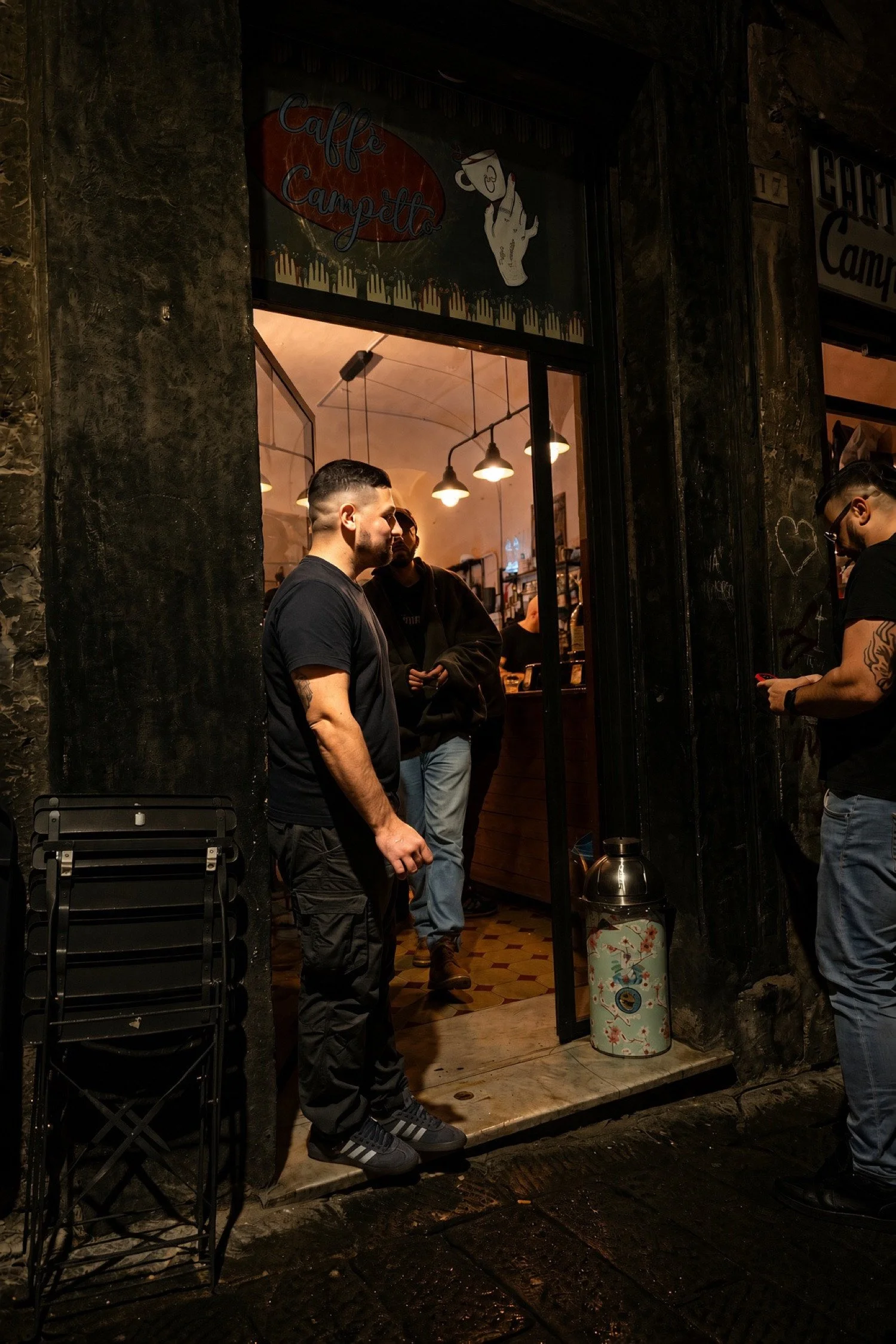
La sera del 14 novembre 2026 ho passato alcune ore al Caffè Campetto, in Vico di San Matteo, a Genova. Vivo a Milano, ma Genova è la mia città: quando torno, oltre alle piazze e ai monumenti, cerco i posti in cui la vita di tutti i giorni resta accesa. Quel locale, quella sera, era uno di questi. Qui ti racconto dove si trova, com’è l’atmosfera, e come ho fotografato le persone e lo spazio — con il loro consenso, e con la luce delle lampade.
Dove si trova il Caffè Campetto
Il Caffè Campetto è in Vico di San Matteo 17r, nel centro storico di Genova, accanto a Piazza San Matteo e non lontano dalla Cattedrale di San Lorenzo. Si arriva a piedi, tra i carruggi. Dall’esterno si riconosce già: l’insegna dipinta — una mano che tiene una tazzina — e la luce calda che dal bancone arriva sulla pietra del vicolo. Sulla soglia c’era già qualcuno: il locale si capisce prima ancora di entrare.
Per orari e serate, meglio controllare i loro canali: il profilo Instagram è @caffecampetto, e c’è anche la pagina Facebook.
Com’è l’atmosfera, appena si entra
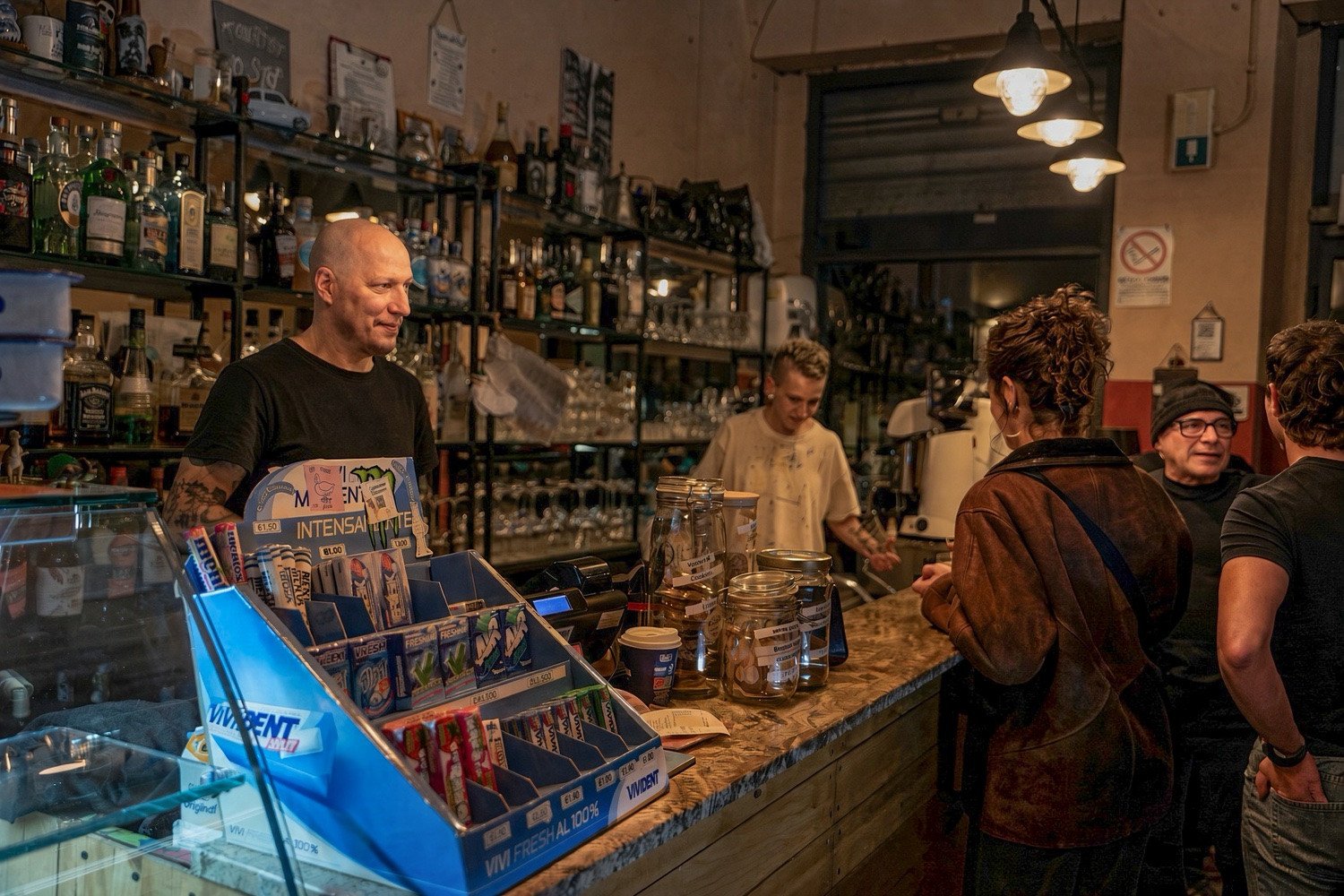
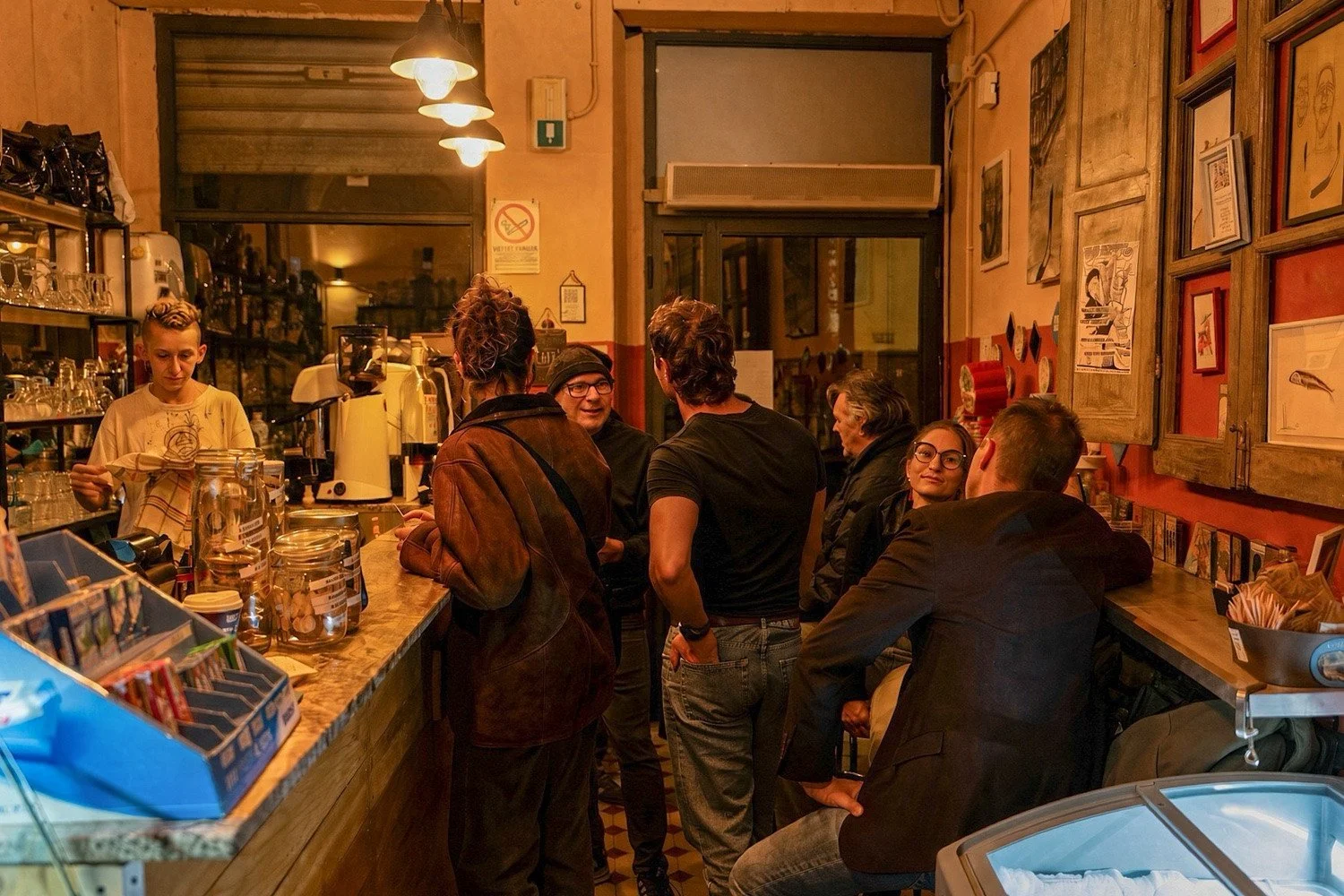
Lo spazio è raccolto, e la gente lo riempie: si sta al bancone, si parla, si guarda intorno. Le pareti sono di un ocra caldo e di un rosso che torna in più punti del locale, con cornici e oggetti appesi. Dietro al bancone, bottiglie, tazzine, la macchina del caffè: il lavoro di un bar che è aperto e lo dimostra.
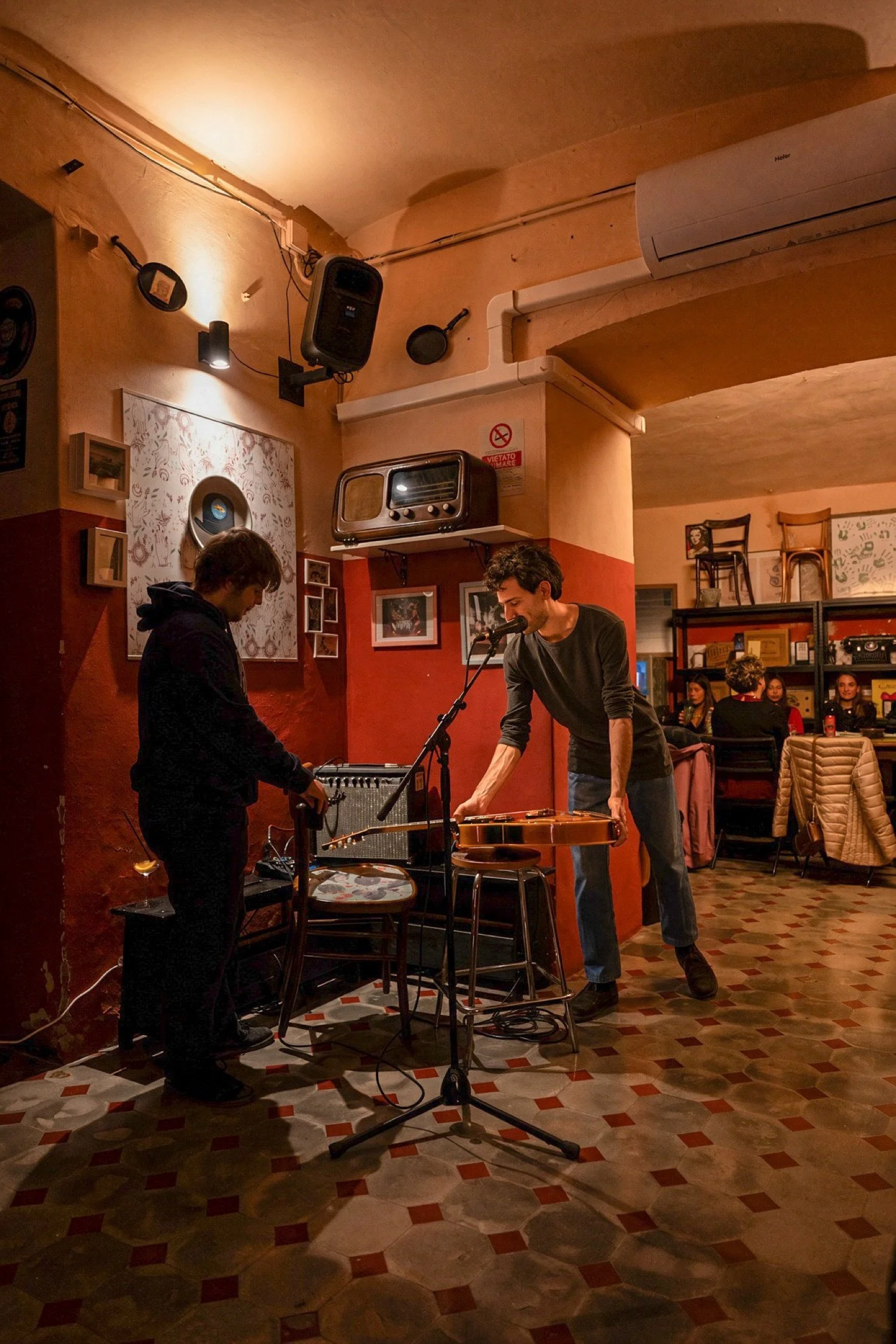
Quella sera, in un angolo, c’erano anche due musicisti. Chitarra, microfono, amplificatore, e sotto i piedi le piastrelle con i rombi rossi. Non un palco vero e proprio: un pezzo di stanza lasciato alla musica, e funzionava così.
Fotografare le persone in un bar: prima si chiede
Entrare in un locale con la macchina al collo non è un diritto. Io ho chiesto, e al Campetto ho trovato un sì, da chi lavora e da chi era lì da cliente. Senza quel permesso questa serie non esisterebbe. Se vuoi fotografare in un bar, il modo più semplice è anche il più rispettoso: presentati, spiega cosa stai facendo, accetta un eventuale no e non insistere. La fotografia arriva dopo.
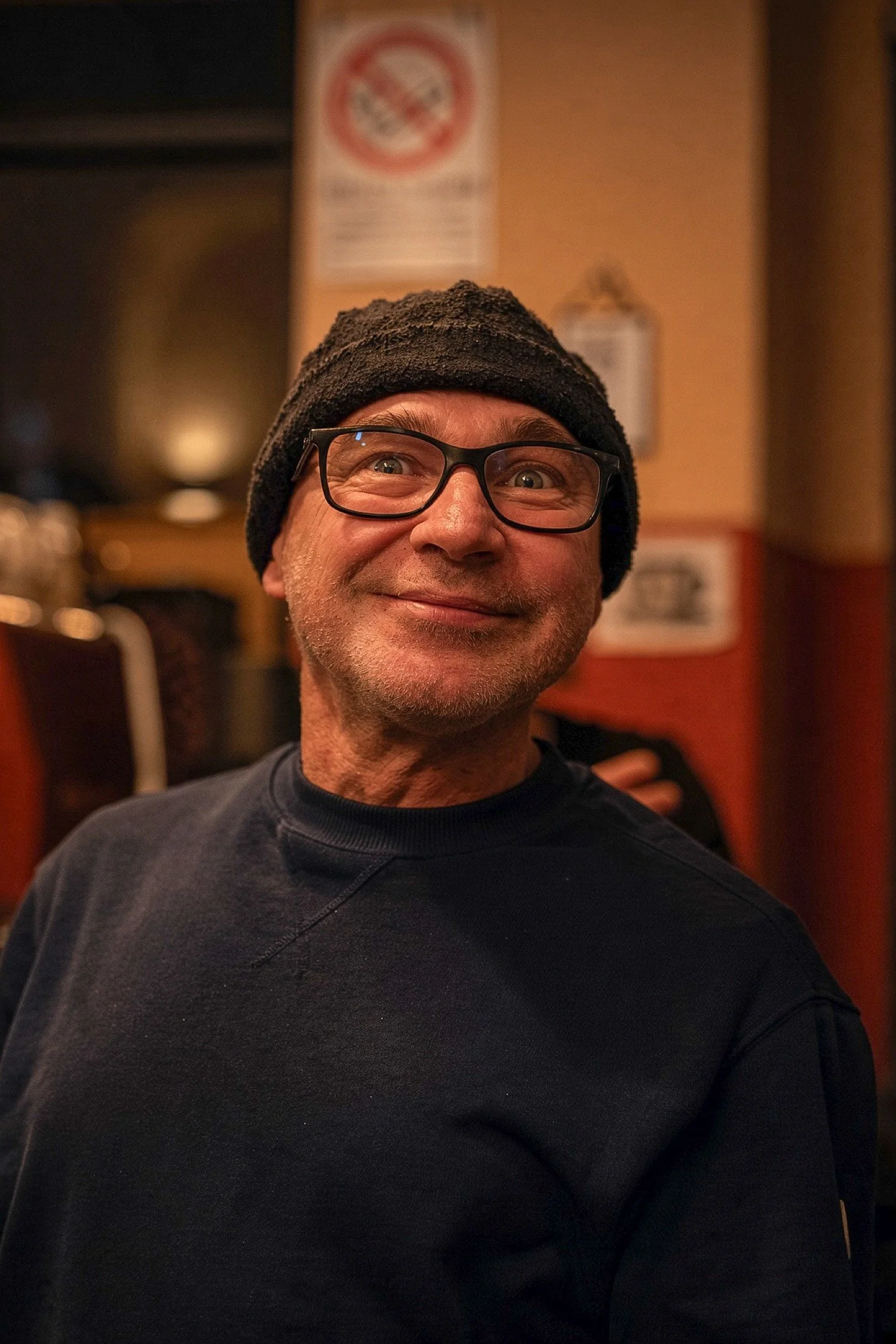
Una fotografia di quella serata mi è rimasta più delle altre. È il ritratto di un cliente con berretto e occhiali, e un sorriso largo. Il suo nome non lo so, e non lo invento: per me resta il signore del Campetto. Ha accettato di farsi fotografare, con una simpatia vera. A lui, per primo, va il mio grazie.
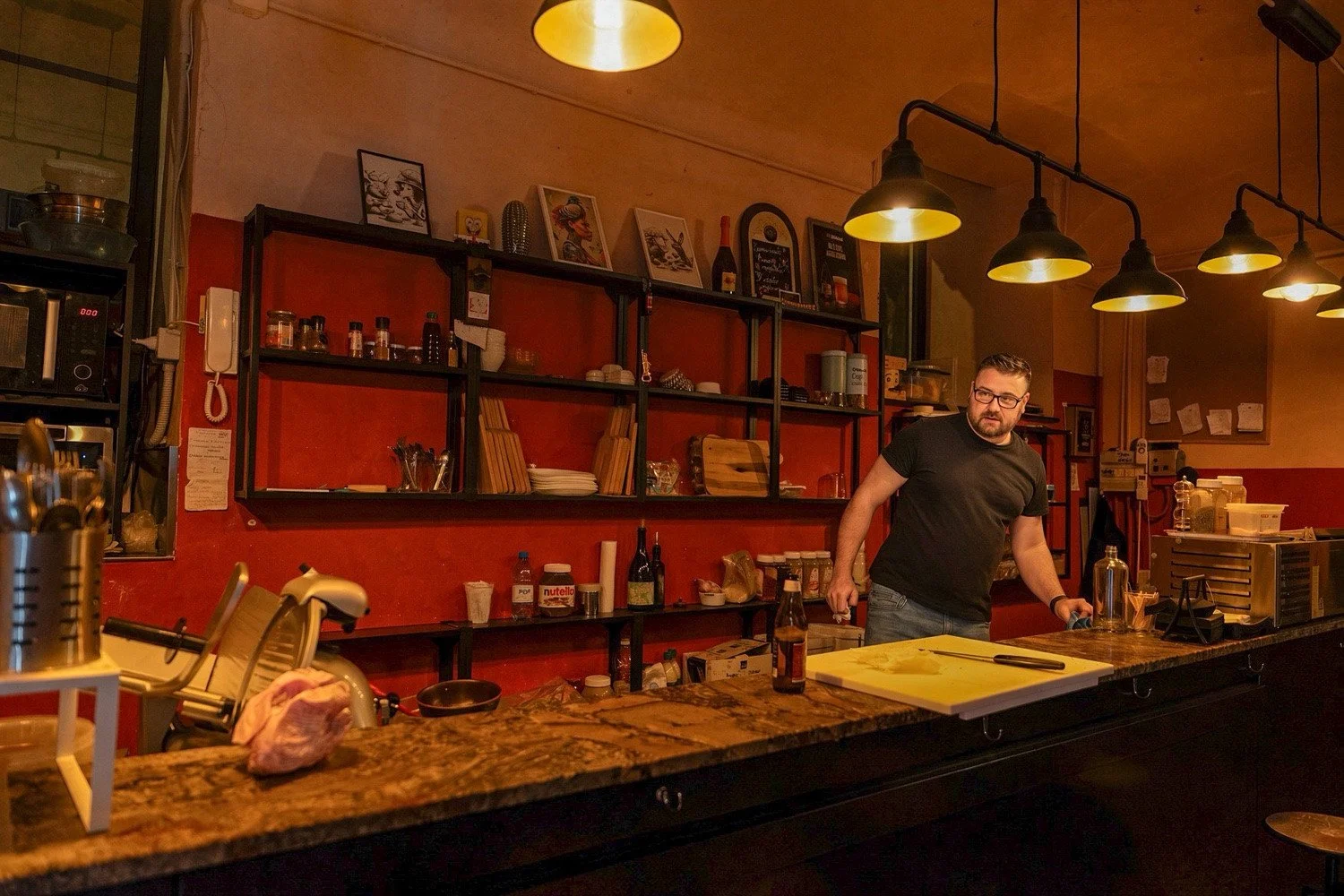
Ho chiesto il permesso anche in cucina. C’è un bancone lungo, una parete rossa, lampade dall’interno giallo, e una persona che ha accettato di posare un momento. Anche lì ho trovato la stessa disponibilità.
Fotografare di sera, con la luce del locale
Di notte, in un posto così, la luce la fanno già le lampade: basse sul bancone, gialle in cucina, più morbida in fondo alla sala. Ho lavorato con quella che c’era. Mi sono messo da un lato, ho guardato, e ogni tanto ho alzato la macchina. Quando le luci sono calde e vicine, conviene esporre per i volti e lasciare che le ombre restino ombre: è quella atmosfera a raccontare la serata.
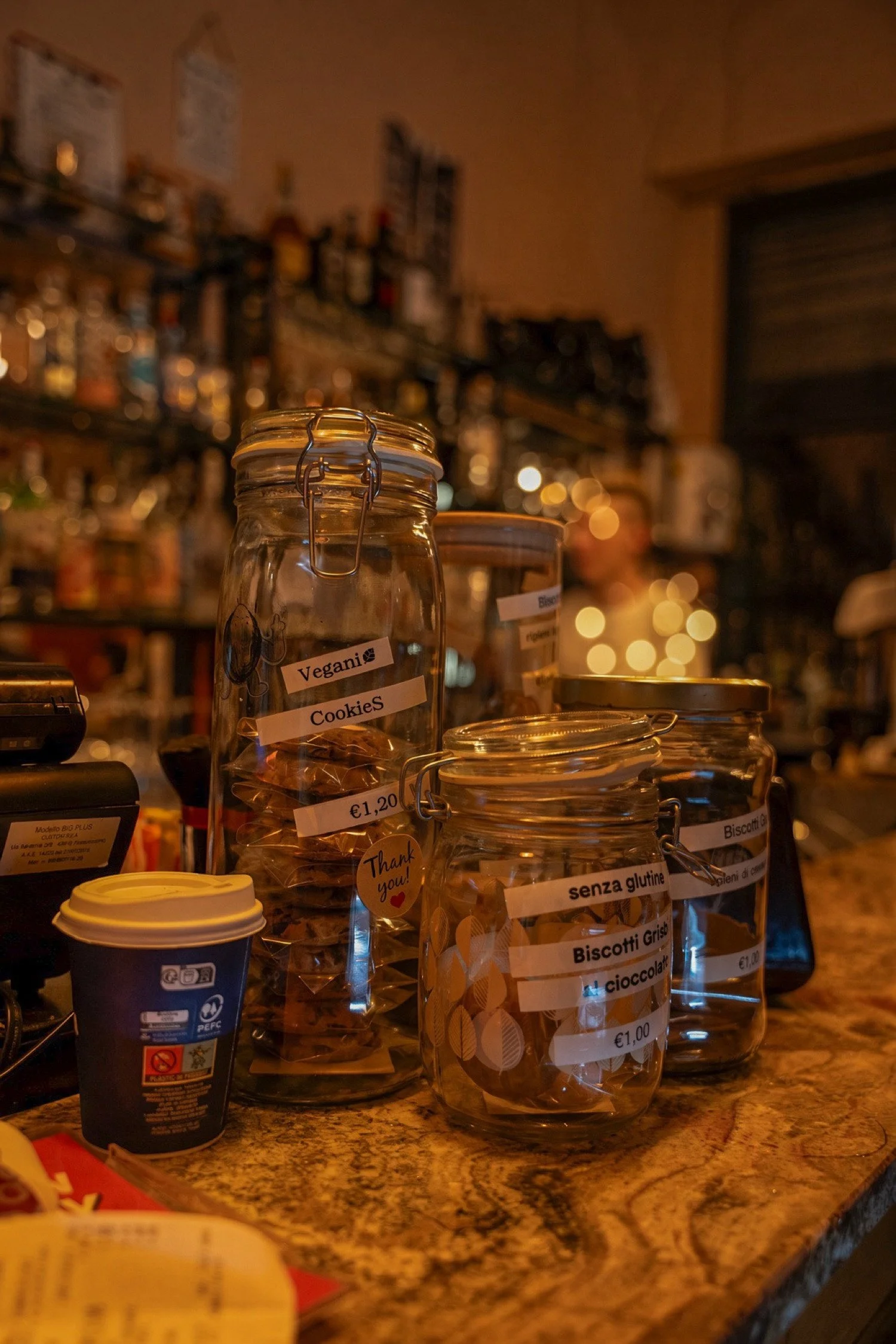
Poi ho cominciato a guardare i dettagli. Sul bancone ho fotografato i barattoli di vetro, con le scritte fatte a mano: «Vegani Cookies», «senza glutine». Sono dettagli piccoli, ma dicono come il locale pensa anche a chi ha esigenze diverse.
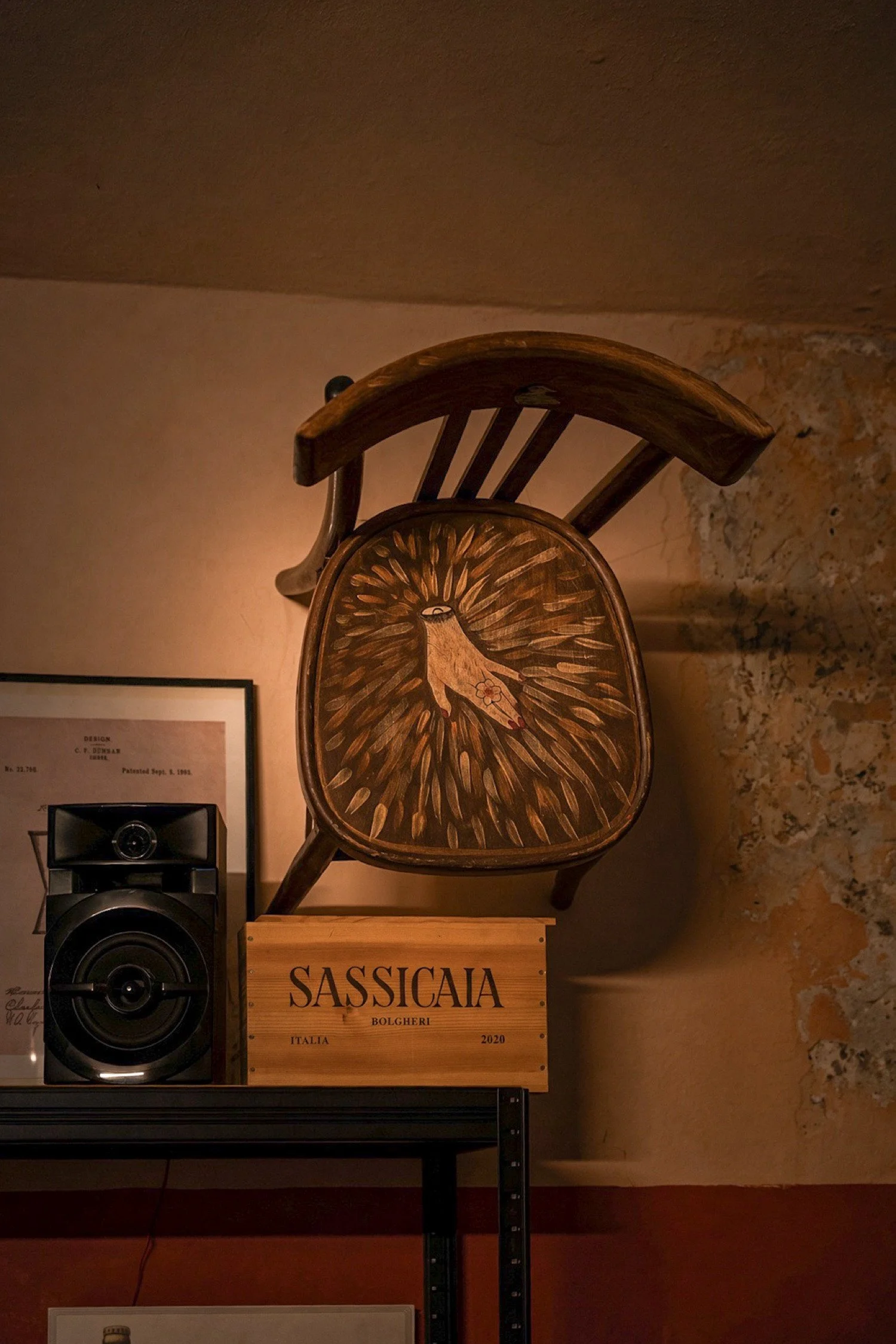
C’è una sedia capovolta, appoggiata a una cassetta di Sassicaia, con sul sedile una mano dipinta: al centro del palmo un occhio, intorno i raggi. Lo stesso gesto torna nell’insegna, nella mano che tiene la tazzina. Chi l’abbia dipinta non lo so, e non costruisco una storia. Era lì, e valeva uno scatto.
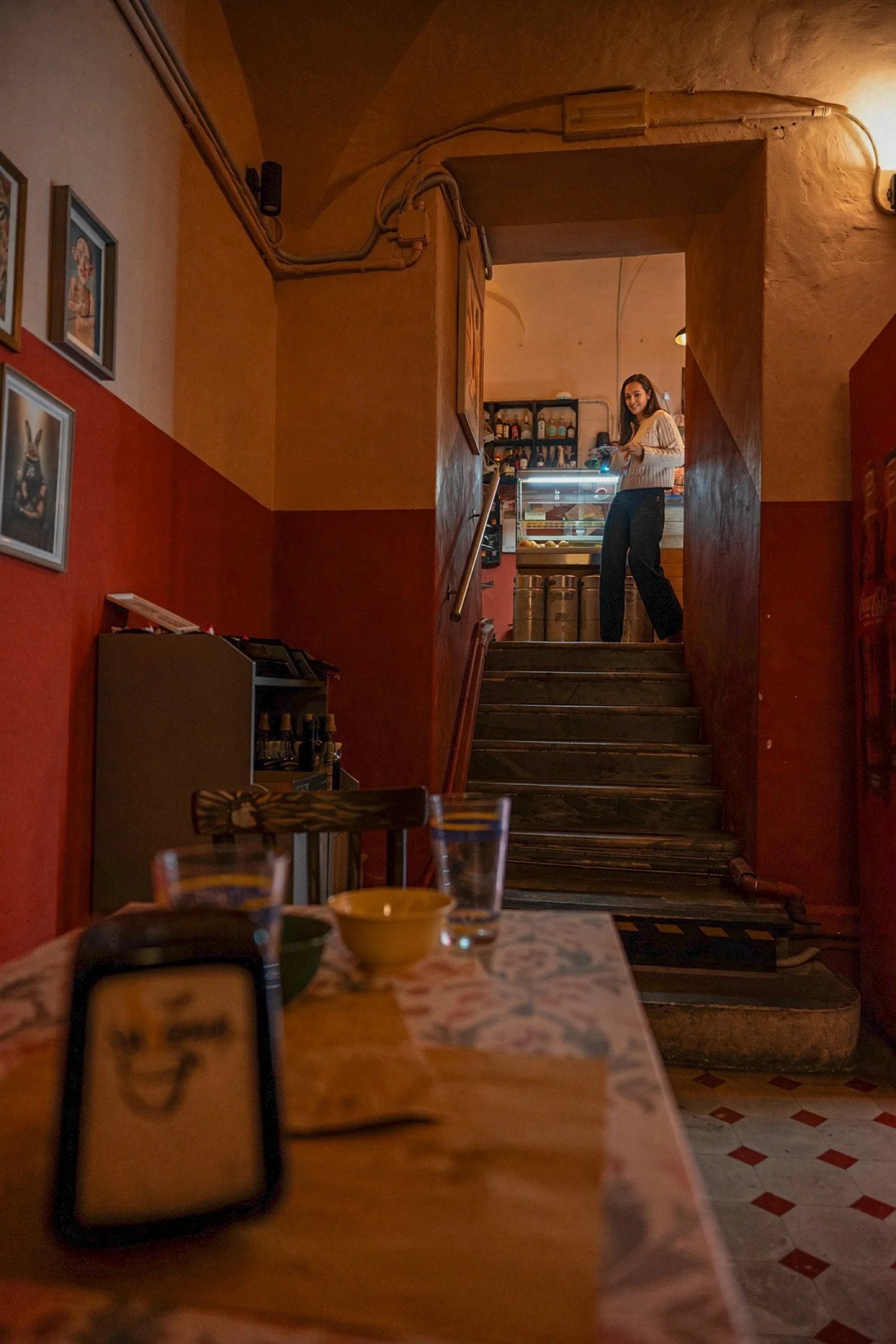
In un’altra inquadratura ho tenuto insieme ciò che sta vicino e ciò che sta lontano: in primo piano un tavolo, con un bicchiere e una ciotola; in fondo una scala che sale verso un’altra luce, e in cima una ragazza che si ferma un attimo.
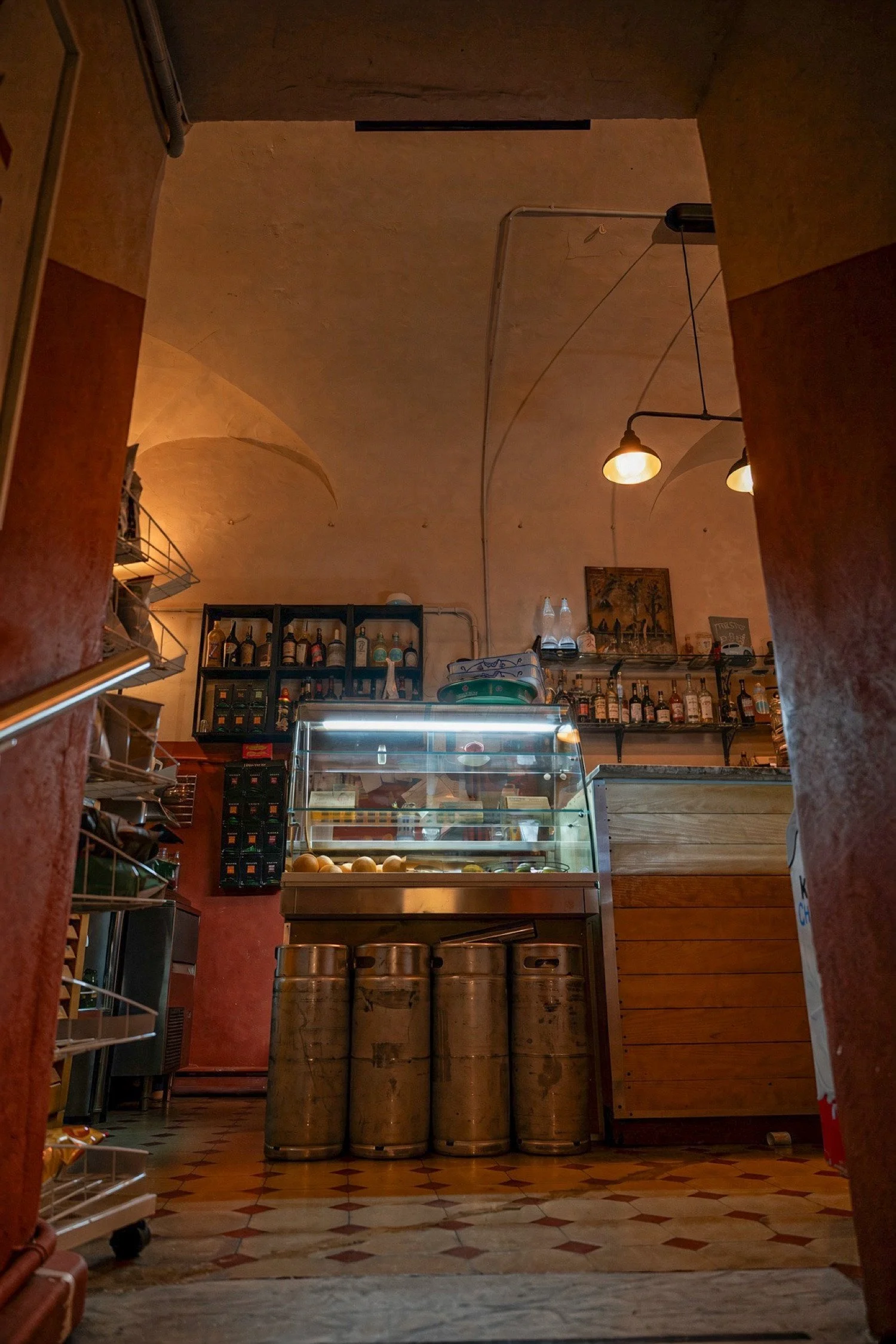
In fondo c’è un angolo più riparato: una vetrina illuminata, i fusti sotto, il soffitto a volta e un paio di lampade. Sembra un piccolo palcoscenico di pietra e metallo.
Io faccio fotografia di strada, ma il racconto non deve per forza restare fuori, sul vicolo. A volte comincia proprio quando superi la porta, se lo fai chiedendo il permesso. I palazzi e le piazze di Genova li ho fotografati molte volte. In un caffè come questo trovo l’altra metà della città: le persone, il lavoro, una lampada accesa, una chiacchiera al bancone.
Se passate da Genova
Queste fotografie esistono perché quella sera, al Campetto, mi è stato concesso di restare con la macchina in mano. Grazie a chi lavora al Campetto, a chi quella sera c’era, al signore del ritratto, a chi suonava e a chi stava in cucina. Grazie anche al locale, in Vico di San Matteo. Se vi trovate nel centro storico di Genova, fateci un salto. Per gli orari, controllate i loro canali: Instagram @caffecampetto e Facebook.
Ho raccontato la stessa serata, in forma più lunga e personale, anche su Substack: Una serata al Caffè Campetto.
Photographing Caffè Campetto in Genoa’s historic centre
The photographs are the same as in the Italian text above.
On the evening of 14 November 2026 I spent a few hours at Caffè Campetto, on Vico di San Matteo, in Genoa. I live in Milan, but Genoa is my city: when I go back, besides the squares and the landmarks, I look for the everyday places where life is still switched on. That café, that night, was one of them. Here is where to find it, what the atmosphere is like, and how I photographed the people and the room — with their consent, and with the light of the lamps.
Where to find Caffè Campetto
Caffè Campetto is at Vico di San Matteo 17r, in Genoa’s historic centre, next to Piazza San Matteo and not far from the Cathedral of San Lorenzo. You reach it on foot, through the carruggi, the old alleyways. From outside it is already easy to recognise: the painted sign — a hand holding a coffee cup — and the warm light that spills from the counter onto the stone of the lane. There were already people on the threshold: you can read the place before you even go in.
For opening hours and evenings, check their channels: they are on Instagram as @caffecampetto, and they also have a Facebook page.
The atmosphere, as soon as you walk in
The room is compact, and people fill it: they gather at the counter, they talk, they look around. The walls are a warm ochre and a red that returns in more than one corner, with frames and objects hanging on them. Behind the counter: bottles, cups, the coffee machine — the work of a bar that is open and looks it.
That evening, in a corner, there were also two musicians. A guitar, a microphone, an amplifier, and underfoot the tiled floor with its red diamonds. Not a real stage: a piece of the room given over to the music, and it worked that way.
Photographing people in a bar: ask first
Walking into a café with a camera around your neck is not a right. I asked, and at Campetto I was met with a yes, from the people who work there and from the customers. Without that permission this series would not exist. If you want to photograph in a bar, the simplest way is also the most respectful: introduce yourself, explain what you are doing, accept a no if it comes, and don’t push. The photograph comes after.
One photograph from that evening has stayed with me more than the others. It is the portrait of a customer in a cap and glasses, with a wide smile. I don’t know his name, and I won’t invent one: to me he remains the gentleman of Campetto. He agreed to be photographed, with real kindness. My first thanks go to him.
I asked for permission in the kitchen as well. There is a long counter, a red wall, lamps with a yellow interior, and someone who agreed to pose for a moment. There, too, I found the same willingness.
Photographing at night, with the light that’s already there
At night, in a place like this, the lamps already make the light: low over the counter, yellow in the kitchen, softer at the back of the room. I worked with what was there. I stood to one side, I watched, and every so often I raised the camera. When the lights are warm and close, it helps to expose for the faces and let the shadows stay shadows: that atmosphere is what tells the evening.
Then I started looking at the details. On the counter I photographed the glass jars, with handwritten labels: “Vegani Cookies”, “senza glutine”. They are small details, but they show how the place also thinks of anyone who needs a different option.
There is a chair turned upside down, resting on a Sassicaia wine crate, with a hand painted on the seat: an eye in the middle of the palm, rays around it. The same gesture returns in the sign, in the hand that holds the cup. I don’t know who painted it, and I won’t build a story around it. It was there, and it was worth a frame.
In another frame I held together what is near and what is far: in the foreground a table, with a glass and a bowl; in the background a staircase rising towards another light, and at the top a young woman pausing for a moment.
At the back there is a more sheltered corner: a lit display case, kegs underneath, a vaulted ceiling and a couple of lamps. It feels like a small stage of stone and metal.
I work in street photography, but the story doesn’t have to stay outside, in the alley. Sometimes it begins just as you step through the door, if you do it by asking first. I have photographed Genoa’s palazzi and squares many times. In a café like this I find the other half of the city: people, work, a lamp left on, a conversation at the counter.
If you’re in Genoa
These photographs exist because that evening, at Campetto, I was allowed to stay with the camera in my hands. Thank you to the people who work at Campetto, to everyone who was there that evening, to the man in the portrait, to those who played and to those in the kitchen. And thank you to the café itself, on Vico di San Matteo. If you find yourself in Genoa’s historic centre, stop by. For opening hours, check their channels: Instagram @caffecampetto and Facebook.
I also wrote a longer, more personal account of the same evening on Substack: Una serata al Caffè Campetto.